





White Art Sand is a fascinating material that has gained significant popularity in various creative and artistic fields. As a supplier of White Art Sand, I have had the privilege of closely observing its unique characteristics and understanding its diverse applications. In this blog, I will delve into the texture of White Art Sand, exploring its physical properties, how it feels, and its implications for different creative projects.
Physical Properties of White Art Sand
White Art Sand is typically composed of fine, granular particles. These particles are carefully selected and processed to ensure a consistent size and shape. The sand is usually sourced from high - quality natural deposits and then undergoes a series of purification and grading processes.
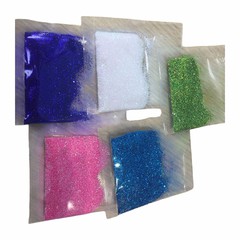
The color of White Art Sand is, as the name suggests, a pure, bright white. This pristine color makes it an ideal choice for a wide range of artistic and decorative applications, as it can serve as a clean and neutral base or be easily dyed to create custom colors.
In terms of particle size, White Art Sand generally has a relatively fine texture. The particles are small enough to flow smoothly and be easily manipulated, yet large enough to provide a tangible and tactile experience. This balance in particle size is crucial for its usability in different creative endeavors.
The Tactile Experience of White Art Sand
When you first touch White Art Sand, you'll notice its softness. The fine particles glide smoothly between your fingers, creating a gentle and almost velvety sensation. Unlike some coarser sands, White Art Sand doesn't feel rough or abrasive. Instead, it has a delicate and pleasant texture that makes it a pleasure to handle.
As you move your hand through the sand, you can feel the individual particles shifting and flowing. This fluidity gives the sand a dynamic quality, allowing you to create different shapes and patterns with ease. Whether you're molding it into a sculpture or simply running your fingers through it, the sand responds to your touch in a way that is both satisfying and inspiring.
The texture of White Art Sand also has a certain stickiness when it is moistened. This property is particularly useful in applications where you need the sand to hold its shape, such as in sand art or when creating plaster - like structures. When mixed with a small amount of water, the sand particles bind together, allowing you to build up layers and create more complex forms.
Applications Based on Texture
Sand Art
The fine and smooth texture of White Art Sand makes it perfect for sand art. Artists can use it to create detailed and intricate designs on various surfaces. The sand can be poured, sifted, or spread to form patterns, and its white color provides a beautiful contrast against colored backgrounds. Whether it's creating a landscape scene, a portrait, or an abstract design, White Art Sand allows for a high level of precision and creativity.
DIY Crafts
White Art Sand is also a popular choice for DIY craft projects. It can be used in combination with other materials to create unique and personalized items. For example, you can mix it with glue to create a textured paste for decorating wooden or paper surfaces. This paste can be used to add dimension and interest to DIY Plaster Craft Kit, Wooden Product DIY Toys, or Paper Product DIY Toys.
Educational Purposes
In educational settings, White Art Sand is often used to teach children about geology, art, and creativity. Its soft texture and easy - to - manipulate nature make it a great tool for hands - on learning. Children can use the sand to create models of mountains, rivers, or even simple sculptures, helping them develop fine motor skills and spatial awareness.
Decorative Applications
The pure white color and fine texture of White Art Sand make it an excellent choice for decorative purposes. It can be used to fill vases, bowls, or other containers to create a stylish and modern look. You can also use it to line the edges of flower beds or create a beach - like atmosphere in your garden.
Factors Affecting the Texture
The texture of White Art Sand can be influenced by several factors. One of the main factors is the source of the sand. Different natural deposits may have slightly different particle sizes and shapes, which can affect the overall texture. For example, sand sourced from a beach may have a coarser texture compared to sand from a quarry.
The processing methods also play a crucial role in determining the texture. The sand may be washed, sieved, and treated to remove impurities and ensure a consistent particle size. The degree of grinding and sorting can also impact the smoothness and fineness of the sand.
Moisture content is another important factor. As mentioned earlier, when the sand is moistened, it becomes stickier and more malleable. However, if the sand is too wet, it may clump together and lose its fluidity. On the other hand, if it is too dry, it may be more difficult to shape and hold its form.
Comparing White Art Sand with Other Types of Sand
Compared to regular beach sand, White Art Sand has a much finer and more consistent texture. Beach sand often contains a variety of particles of different sizes and shapes, as well as shells and other debris. This can make it less suitable for some artistic and creative applications.
Play sand, which is commonly used in sandboxes, is also coarser than White Art Sand. Play sand is designed to be durable and withstand heavy use, but its larger particles may not provide the same level of detail and precision as White Art Sand.
In contrast, specialty sands such as colored sand or kinetic sand have different textures and properties. Colored sand is often dyed and may have a slightly different feel due to the dyeing process. Kinetic sand has a unique, sticky texture that allows it to be molded and shaped easily, but it is quite different from the natural feel of White Art Sand.
Quality Control and Consistency
As a supplier of White Art Sand, ensuring the quality and consistency of the product is of utmost importance. We have strict quality control measures in place to ensure that each batch of sand meets our high standards. This includes regular testing of particle size, color, and texture.


We also work closely with our suppliers to source the best - quality raw materials. By carefully selecting the sand deposits and using advanced processing techniques, we can maintain a consistent texture and quality across all our products.
Conclusion
The texture of White Art Sand is a key factor in its popularity and versatility. Its fine, soft, and fluid nature makes it suitable for a wide range of creative and artistic applications. Whether you're an artist, a DIY enthusiast, or an educator, White Art Sand offers a unique and enjoyable tactile experience.
If you're interested in purchasing White Art Sand for your next project, we would be more than happy to discuss your requirements. Our team of experts can provide you with detailed information about our products and help you choose the right type of sand for your specific needs. Contact us to start a procurement discussion and bring your creative ideas to life.
References
- "The Art of Sand: A Comprehensive Guide to Sand - Based Crafts" by Jane Smith.
- "Texture in Art: Understanding and Utilizing Different Materials" by John Doe.
- "Sand Science: Exploring the Physical Properties of Sand" by Science Publishing Group.